
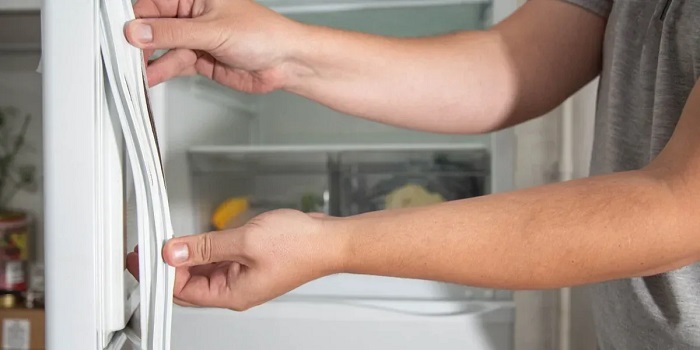
The refrigerator door seal is responsible for the airtightness of the refrigerator: it keeps cold air in and prevents warm air from escaping. When the seal becomes loose or becomes uneven, the appliance works harder and food spoils faster.
Even a small gap around the door can lead to ice buildup, increased humidity, and increased energy consumption. Therefore, it’s important to recognize signs of seal wear early and understand what you can do yourself and when it’s best to call a professional from fridge compressor repair.
What you can do yourself
- Cleaning: Wash the seal with warm water and a mild detergent, then wipe dry. Use a cotton swab or soft brush on creases.
- Restoring shape: For minor creases, gently warm the rubber with warm air (without overheating) and smooth it out by hand until it cools.
- Checking the load: Remove heavy objects from the door and distribute the weight across the shelves inside the chamber.
- Adjusting the position: If there is obvious misalignment, leveling the feet and tightening the hinge fasteners (if the design allows) may help.
When replacement and professional assistance are required
If the seal is torn, has lost its magnetic properties, has deep cracks, does not return to its original shape after heating and cleaning, or if the door remains misaligned, it is best to replace the seal and simultaneously check the hinges. It’s important to select the seal precisely for your refrigerator model and install it correctly around the entire perimeter to prevent repeated cold leaks.
Prevention involves regularly cleaning the edge, carefully closing the door without slamming, applying a reasonable amount of pressure to the door shelves, and periodically checking for leaks. These simple steps extend the life of the seal and help the refrigerator maintain a stable temperature without wasting energy.
Summary: How to quickly check if the seal is leaking cold
If the refrigerator door seal is no longer sealing properly, the appliance will run longer and more frequently, the interior temperature will become less stable, and moisture and ice may form on the walls. The main task is to distinguish a temporary problem (dirt, misaligned shelves, a loose door) from actual wear and tear of the rubber.
A combination of several signs and simple checks is usually enough to determine that cold is escaping through the door. The sooner a leak is detected, the less stress the compressor puts on it and the lower the risk of food spoilage.
Quick Checklist: Signs and Quick Checks
- Visual signs: cracks, tears, deformation, “waves,” peeling seals, areas where the rubber does not touch the body.
- Indirect symptoms: the compressor runs almost continuously, food is not cooling as well, condensation appears around the door, ice forms near the door, and an unpleasant odor due to constant humidity.
- Paper check: clamp the paper with the door and pull; if the paper comes out easily in one or more areas, there is a leak.
- Flashlight check: shine a light from the inside around the perimeter in the dark; A clear spot on the outside will indicate the leak.
- Hand test: Run your hand near the gap – a cool draft near the seal often indicates a seal issue.
- First, rule out the simplest possible causes: remove any objects that might interfere with the seal, check the refrigerator’s alignment, and check the operation of the hinges.
- Clean the seal: dirt and sticky residue can interfere with the seal and create gaps.
- Make 2-3 checks around the perimeter: paper and a flashlight provide the most visual results.
- If the leak persists: If there is obvious wear or deformation, the seal usually requires replacement.
Rule of thumb: one random “weak” area may be due to dirt or misalignment, but if the paper easily comes out in several places and there is condensation/ice, the seal is leaking. and it’s better to fix the problem without delay.