
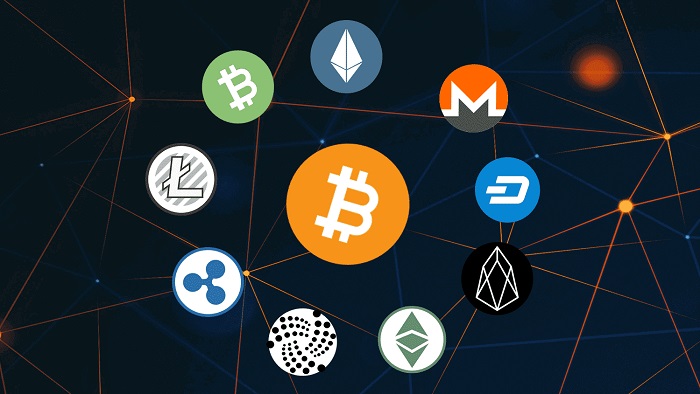
Cryptocurrencies encompass a wide range of categories: from payment coins (such as Bitcoin and Litecoin) and smart-contract platform tokens (like Ethereum and its counterparts) to stablecoins pegged to fiat currencies and utility tokens designed for use within specific services. Differences in purpose, liquidity, transaction confirmation speed, and fee structures directly influence how exchanges take place and the costs incurred by the user.
Classifying Digital Assets by Purpose
In the crypto-economy with Coino Live, digital assets are distinguished by the specific function they serve—whether acting as a medium of exchange, providing access to a service, representing a claim on a share of value, or establishing unique ownership. This classification helps in understanding how demand for an asset is generated and which factors influence its liquidity during an exchange, such as the size of its user base, market depth, the availability of trading pairs with fiat currencies, and the extent to which the asset is listed on various exchanges.
From the perspective of exchanging assets, it is important to note that an asset’s “purpose” often dictates its typical use cases and the frequency of transactions.
For example, payment-focused coins typically aim for low transaction fees and high transfer speeds, whereas investment-oriented assets are often held for longer periods, which can lead to abrupt fluctuations in their market supply.
Main Categories by Purpose
- Payment cryptocurrencies – designed for transfers and settlements, where confirmation speed and total costs (network and exchange fees) are the primary considerations.
- Utility tokens – provide access to a product or feature (such as payment for services within an ecosystem); their value may therefore depend on user activity within that ecosystem.
- Governance tokens – grant the right to vote on protocol changes; liquidity and volatility often increase during significant votes or protocol updates.
- Stablecoins – designed to maintain a stable price relative to a specific benchmark; they are frequently used as an “intermediary currency” when moving between different coins or exchanges.
- Investment/collateralized assets – represent a claim on a portion of value (e.g., asset-backed tokens); in these cases, the transparency of the underlying collateral and trust in the issuer are critical.
- NFTs – establish the uniqueness and ownership of a digital object; these are typically traded on specialized platforms, with their price driven largely by the rarity of and demand for the specific item.
Classification of Digital Assets by Technology
A single asset can often exist in various technological forms: as the “native” coin of a network, as a token based on a smart-contract standard, or as a “wrapped” version on a different network. This affects the exchange process: it introduces bridges, additional fees, and risks associated with smart contracts and cross-chain infrastructure.
- Native coins – issued on their own blockchain and typically used to pay for transaction fees; their exchange is closely tied to the state of the network and its current load.
- Smart contract tokens – created within platform blockchains according to specific token standards; when exchanging these, the integrity of the smart contract and its support by exchanges and wallets are critical.
- Wrapped assets – represent the value of an underlying asset within a different network; exchanging them introduces risks related to the custodian or the smart contract that manages their issuance and redemption.
- Real-world asset (RWA) tokens – rely on a legal and organizational infrastructure; when exchanging these, the rules governing issuance, redemption, and compliance with platform requirements are significant.