
A craft shop does not need the largest possible bead assortment. It needs enough compatible pieces to let customers finish a project without becoming lost in hundreds of near-duplicate designs. The strongest assortment combines core colours, a few clear themes, matching hardware and instructions that show what each component becomes.
When buying DIY silicone focal beads for beadable pen shops and craft sellers, assortment planning should happen before bulk ordering. A low wholesale price cannot fix inventory that does not coordinate or a focal bead that has no compatible rod and spacers.
Build kits from the finished project backwards
Start with one complete pen: blank pen body, focal bead, round or accent beads, spacers and any topper. Check rod length and diameter, total stack height, mechanism movement and writing balance. Then define which components can be swapped without losing fit.
A kit should include enough choice to feel personal while keeping assembly understandable. For beginners, one focal, two or three supporting beads and the required hardware may be more successful than an unstructured bag of components.
Separate core inventory from trend inventory
Core products should remain useful across seasons: simple colours, common shapes, occupation or hobby themes and pen bodies that customers already understand. Trend products can create excitement but should enter in smaller quantities until sell-through is known.
Seasonal timing matters. Halloween or holiday beads need to arrive early enough for makers to assemble, photograph and ship finished products. Ordering after consumer interest peaks creates a year of storage for a design that may not return unchanged.
Use open-to-buy limits for each theme. Reorder strong designs based on sales and kit conversion rather than social-media views alone.
Colour palettes reduce dead stock
A focal bead is easier to sell when customers can immediately find matching rounds, spacers and pen bodies. Build palette families such as muted neutrals, bright school colours, pastel gifts or team colours. Photograph several combinations so shoppers see options without needing every combination preassembled.
Keep colour naming consistent. “Sage,” “mint” and “light green” may look different across suppliers or batches. Retain physical samples and note which components were photographed together.
Product pages should show scale and compatibility
Close-up images make a small bead look impressive but can hide its size. Add dimensions, hole orientation and a photograph on the intended beadable pen. Show front, side and back where the design is not symmetrical.
Compatibility statements should name the tested rod or item. Avoid claiming a focal fits every pen. If light stretching is normal, explain it without encouraging customers to force a component that can tear.
Wholesale packs need a clear counting method
Agree whether quantities are counted by piece, design or weight, and whether mixed packs contain equal quantities. Inspect counts and design distribution on arrival. For a shop, one missing high-demand focal can be more disruptive than the same value of extra low-demand pieces.
Packaging should separate printed or delicate designs, prevent deformation and preserve SKU identity. A shop that receives several mixed themes in an unlabelled bag spends labour sorting before it can sell.
Safety depends on the finished craft
Silicone beads are small components. Material descriptions such as food-grade do not make an assembled pen a food-contact item, teether or children’s toy. Pens include small parts and metal mechanisms that can create choking or injury hazards.
Sellers should identify the intended audience and comply with applicable product, labelling and marketplace requirements. If a project is for adults, say so clearly. Do not use baby, chew or sensory claims without a complete assessment of every component and the finished construction.
Instructions should include secure assembly and periodic inspection. A loose focal, spacer or pen part should be removed from use rather than treated as a cosmetic issue.
Original themes are easier to build into a brand
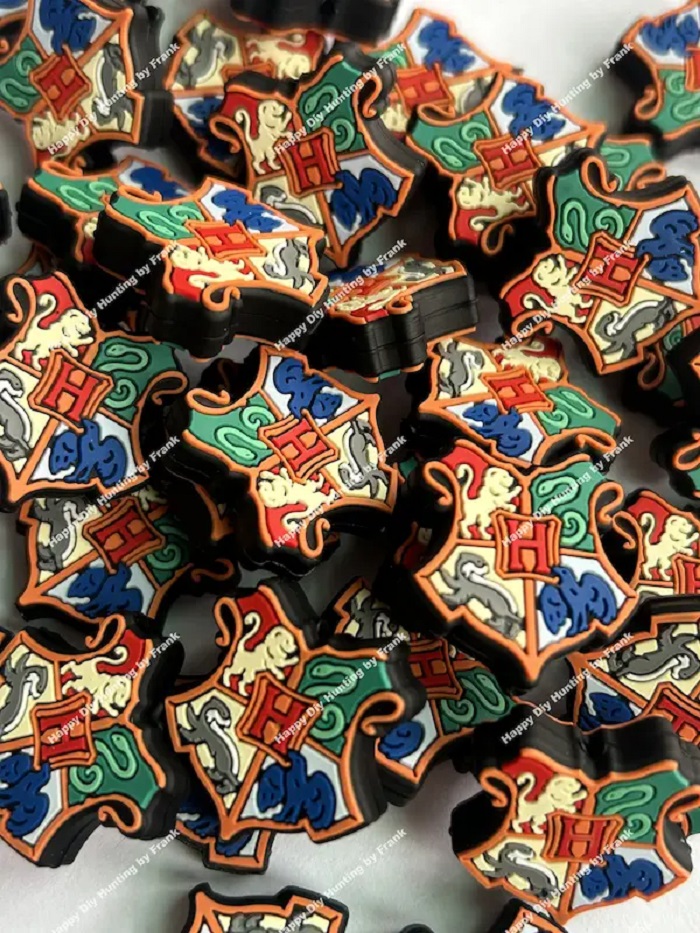
Wholesale catalogues may include designs that resemble famous characters, logos or protected art. Availability does not prove resale rights. Craft sellers should request licensing evidence where necessary and conduct their own review before listing.
Generic themes, original artwork and licensed designs allow a shop to create photography, bundles and repeat collections with clearer ownership. They also reduce the risk that a marketplace removes the listing after marketing work has been done.
Content should teach one project, not repeat the catalogue
A shop can turn each assortment into useful content: how to balance a pen, how to combine three colours, how to avoid overfilling the rod, or how to select a gift theme. This helps customers use the products and gives the shop more distinctive pages than supplier descriptions alone.
Happy DIY Hunting lists silicone focal beads, round silicone beads, beadable pens, toppers, acrylic beads and other craft components. That breadth can support coordinated projects when the retailer curates it rather than importing every category equally.
Run a small launch before committing
- Assemble and photograph each kit with the actual hardware.
- Check focal hole fit, stack height and writing balance.
- Launch a limited palette or theme and track conversion.
- Record returns, assembly questions and slow-moving components.
- Reorder winners from a later batch to test consistency.
- Keep compliance and design-rights evidence with the SKU record.
Retailers can review Happy DIY Hunting craft supplies and its wholesale silicone focal beads while building a smaller, compatible range.
The central merchandising view is that curation creates value. When every focal has a tested pen, a matching palette and a clear project idea, customers see what to make and the shop can reorder with evidence instead of guesswork.