
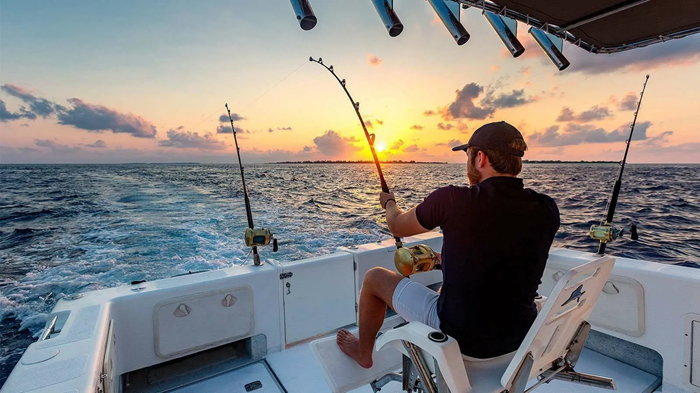
Fishing from a yacht combines the comfort of a sea voyage with the thrill of fishing at depths inaccessible from shore. This format allows you to quickly change locations, adapt to the weather and fish migration, and combine fishing with swimming, walking, and anchoring in picturesque bays yachtcharteradvisor.com.
To ensure a successful and safe trip, it’s important to consider the characteristics of the sea, navigation rules, and equipment requirements. Proper preparation allows you to avoid unnecessary risks, preserve your catch, and enjoy the process.
Rules and Preparation: What to Consider Before You Go
Legalities and Restrictions. Check local regulations: permitted fishing methods, minimum fish sizes, daily catch limits, restrictions during the spawning season, and rules for visiting protected areas. Obtain permits if necessary and comply with fish release regulations.
Weather Conditions and Route Planning
Weather is more important than planning. Before heading out, check the forecast for wind, waves, thunderstorm activity, and visibility. Determine shelter points, acceptable wind and wave thresholds, and a return time with a reserve in advance.
Safety on Board
- Life jackets should be the correct size for each participant and used according to the situation, especially in rough seas and at night.
- Communication: Charge phones, have marine radio communication, and agree on communication checkpoints.
- First Aid Kit: Remedies for cuts, burns, motion sickness, antiseptics, plasters, and bandages.
- Fire and General Discipline: Do not block passages with gear, secure sharp objects, and store fuel and gas properly.
Gear and equipment that enhance Result
Tackle selection depends on the goal. Trolling requires sturdy rods and reels; jigging requires a sensitive set-up and weights appropriate for depth and current; and bottom fishing requires reliable rigs and extra weights. A fish finder and navigation help you quickly find terrain and fish shoals.
- Prepare a supply of leaders, snaps, hooks, and lures for different conditions.
- Take tools: pliers, a fish extractor, a knife, and gloves for handling fish.
- Organize storage of your catch: a container, ice, or a cooler to preserve the quality of the fish.
- Consider lighting and flashlights if you plan to fish at dusk.
Ethics, Cleanliness, and Respect for the Resource
Responsible fishing includes careful handling of fish, responsible fishing, and mandatory waste collection. Line, lure packaging, and hooks should not fall into the water; Whenever possible, use safe rigs and avoid leaving drop-offs.
Organizing a tripis easier if you charter a yacht online in advance and clarify the following: captain availability, fuel requirements, permitted cruising areas, availability of a fish finder, rod holders, and storage space for your catch.
Why fishing from a boat offers a better chance of landing a trophy
Fishing from a yacht increases access to promising areas that are difficult or impossible to reach from the shore: drop-offs, edges, banks, fairway holes, current edges, and edges of open water with grass. This allows you to quickly locate active fish and target them precisely, changing spots during a single trip without wasting time on foot.
From the boat, it’s easier to control the bait feed and retrieve: you can maintain the desired depth, move the bait along the terrain, or perform a strictly vertical play above the echo sounder’s mark. Choosing the right location and following safety rules increases not only the number of bites but also the likelihood of encountering a large specimen.
- More “right water” in less time: moving between spots speeds up the search for a trophy and reduces reliance on chance.
- Precise terrain work: anchoring or maintaining a course allows you to fish drop-offs and channel edges most effectively.
- Access to depth: large fish often stay at a distance and at depth, especially in hot weather, under pressure and in clear water.
- Use of devices: a fish finder and navigation help find schools of fish, bottom structure, and record productive coordinates for repeat approaches.
- Better control of the landing: you can lead the fish away from Snags, grass, and rocks can be easily removed by maneuvering the yacht, reducing the number of losses.
- Fewer factors that interfere with fishing: there are no coastal weeds behind you, it’s easier to change tackle and bait, and it’s more convenient to store and maintain equipment.
- Choose a site: focus on depth changes, current, food supply, and seasonal fish habitats.
- Position the boat correctly: adjust the anchor, drift, or slow speed to the wind and current so that the bait moves within the fish’s zone.
- Maintain discipline: gear order, clear commands when landing, mandatory life jackets, and adherence to navigational rules.
- Record your results: mark spots and conditions to quickly repeat successful scenarios.
Bottom line: Fishing from a boat offers a better chance of landing a trophy because it combines mobility, access to deep and remote areas, precise bait placement, and situational awareness. With proper boat positioning and adherence to safety rules, this transforms finding big fish from luck into a controlled strategy.