
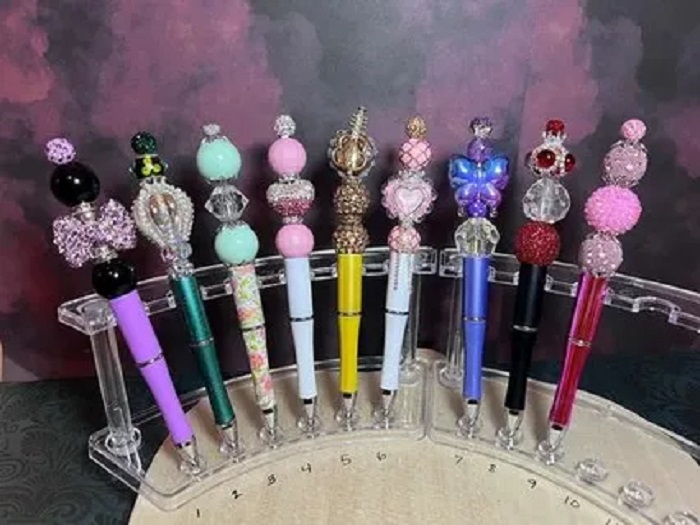
A small craft shop does not need hundreds of finished pens on display. It needs the right assortment, a clear way to restock it, and enough room to notice what customers actually choose.
That distinction matters. Beadable pens are easy to personalize, relatively compact to store, and suitable for gifts, markets, school events, office use, and themed collections. They can also create a messy inventory surprisingly quickly. Every blank color, character, focal bead, spacer, and refill adds another decision. Without a plan, sellers often buy many attractive pieces but still lack enough coordinated parts to complete the designs that sell.
A more useful approach is to build the range in layers.
Begin With a Working Core
The core should be dependable rather than exciting. Choose a few blank finishes that suit many styles, such as black, white, silver, and one or two popular colors. Add basic spacers, versatile accent beads, and replacement refills. These items may not be the stars of a product photo, but they keep the collection usable.
For a new range, consistency is more valuable than maximum choice. Ten units each of four adaptable styles are usually easier to photograph, price, and replenish than one unit each of forty unrelated designs. The smaller range also reveals preferences faster. If white blanks repeatedly sell with pastel focals while black blanks move with Halloween and sports themes, future buying decisions become clearer.
Keep the core visible in your stock sheet. Mark the minimum quantity that triggers a reorder and review it on the same day each week. A simple routine prevents the common situation where a seller has plenty of decorative beads but no compatible pens to finish customer orders.
Add Collections With a Reason
Once the core is stable, add focused groups. Character pens can support birthdays and playful gifts. Sports styles work well for team events and fan merchandise. Rhinestone designs suit customers looking for sparkle, bridal-party favors, or a polished desk accessory. Seasonal themes give shoppers a reason to return, but should be purchased in smaller batches because their selling window is limited.
Each group needs a recognizable point of view. “Pink desk gifts” is easier for a customer to understand than a tray of unrelated pink items. “Halloween character pens” communicates an occasion immediately. “Team-color pen bar” invites customization. A collection name should help the customer picture the use, recipient, or mood before examining every bead.
It is also worth separating character-based designs from simple color stories. Licensed-looking or recognizable character themes can attract attention, while abstract, floral, rhinestone, or color-led pens may have a longer sales life. A balanced shop carries both without relying entirely on a single trend.
Use a 70–20–10 Buying Split
A practical starting point for a small seller is to place about 70 percent of inventory spending into proven core items, 20 percent into seasonal or currently popular themes, and 10 percent into experiments.
The percentages do not have to be exact. Their purpose is to stop a new trend from consuming the entire budget. If a social video makes one character style suddenly popular, test it, but do not assume the demand will last through the next restock cycle.
The experimental portion can include unusual colors, new pen formats, mechanical pencils, touch-screen designs, pen extenders, or a bolder rhinestone style. Track each test separately. A product that receives compliments but no purchases is different from one that sells quietly every week.
Calculate the Finished Cost
The blank is only one part of the cost. Include the focal bead, supporting beads, spacers, refill, packaging, payment fees, damaged components, and assembly time. Sellers who price only from the visible materials often discover that small custom changes erase the margin.
Make one sample from each planned combination and record the actual components. This becomes a build sheet. When an order arrives, the seller does not have to remember whether a design used two spacers or three, or which blank color appeared in the original photo.
Time the assembly of a small batch rather than one pen. The first piece is often slower because tools and materials are still being arranged. A batch of five gives a more realistic labor estimate and shows whether the design is practical to repeat.
Photograph a System, Not Just a Product
Product photography is easier when the range follows a visual system. Use the same background, camera angle, and crop for the main image. Add a close view of the decorative stack and one photograph showing the full pen in a hand or beside a notebook. The final image gives scale and helps customers judge whether a large focal will feel comfortable.
Assign each design a simple code. The code can identify blank finish, theme, and variation, such as BK-HAL-02 for the second Halloween design on a black blank. It does not need to appear prominently to customers, but it makes restocking and custom-order conversations much easier.
Avoid naming five products “pink beadable pen.” Descriptive names help both people and search engines understand the difference. Mention the theme, main material, color, or intended occasion, but keep the wording readable.
Offer Controlled Customization
Customization can increase order value, but an unlimited menu creates slow conversations and uneven results. A controlled menu works better: choose a blank, choose one focal, choose an accent color, and add a name tag or topper if available.
Show examples of combinations that are known to fit. If a customer requests a taller bead stack, explain that comfort and rod length limit the design. This is not a restriction to apologize for; it protects the quality of the finished product.
For online orders, use a short confirmation message listing the chosen blank, theme, accent color, and any personalized spelling. For market orders, a printed selection card keeps the line moving and reduces mistakes.
Plan Bundles Around Real Buyers
A single pen is an easy gift, but bundles can solve more specific needs. Teacher sets might include two pens and spare refills. Small-business packs can coordinate with a shop’s brand colors. Event favors may use one focal style across several blank colors. A pen and badge-reel pairing can appeal to nurses, teachers, and office staff.
Bundles should simplify the purchase, not merely combine slow stock. Make the value clear and limit the number of choices. A customer who needs twelve gifts will appreciate a reliable coordinated set more than a page requiring twelve separate design decisions.
Seasonal bundles deserve firm deadlines. State the last order date for assembly and shipping, then reduce buying as that date approaches. Leftover Christmas or Halloween components may be reusable in other crafts, but finished seasonal pens occupy more space and are harder to repurpose.
Review Sell-Through, Not Likes
Social engagement can be helpful, but it is not an inventory report. Record how many units were available, how many sold, how long the sale took, and whether discounts were needed. Also note requests for items that were unavailable. Repeated requests are useful evidence; a single enthusiastic comment is not.
Review results by group. Perhaps character pens bring shoppers to the table, while rhinestone pens generate better margins. Perhaps touch-screen pens sell slowly online but do well at office events. These patterns should guide the next order.
Do not drop a core design after one quiet week. Likewise, do not expand a trend after one strong weekend. Small shops benefit from measured adjustments because a few unusual orders can distort short-term numbers.
Know When to Broaden the Range
Expand when the current assortment is easy to restock, top designs sell repeatedly, and customers ask for adjacent options. A seller who already manages character pens well might add seasonal characters. A strong rhinestone range might grow into coordinated color collections. A shop serving teachers could test mechanical pencils or badge-reel combinations.
Expansion is premature when basic blanks are frequently out of stock, product names are inconsistent, or the same custom questions take too much time to answer. Fixing the system creates more capacity than adding another box of beads.
The goal is not to display every possible pen. It is to make a range that feels varied to the customer while remaining understandable behind the table. Start with versatile blanks, test themes in small quantities, document repeatable combinations, and reorder from evidence. Sellers who follow that rhythm can grow without tying up their budget in random stock, especially when they source coordinated styles from a dependable selection of wholesale beadable pens