
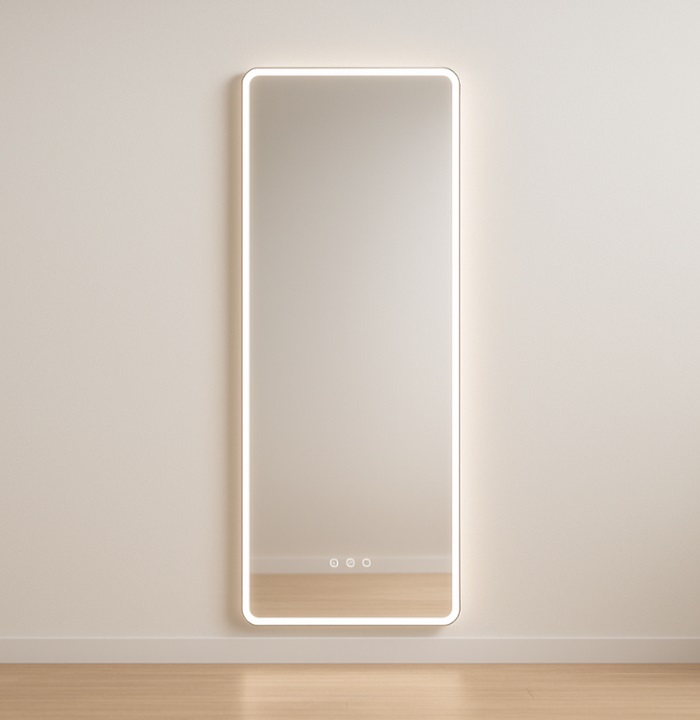
People often ask for the best LED bathroom mirror. A better question is simpler: best for which job, under whose conditions, and with what proof? LED Bathroom Mirrors: Planning Light, Power and Wall Build-Up Before Installation follows the decision into everyday use. It focuses on the points where a vague promise needs to become a measurable condition, a named owner or a sensible trial.
Put mirror size and eye-level lighting into working terms
On paper, mirror size and eye-level lighting often looks settled. On the floor, it rarely is. If the answer depends on one experienced person saying ‘I know it when I see it’, turn that judgement into a photo, limit or short check sheet. The difference only becomes obvious when volume, material, environment or user behaviour moves away from the demonstration case. Agree on the evidence before the test begins, including who can accept a deviation and what happens to the affected work. That gives homeowners, renovators and bathroom designers a decision they can explain later, not just one that felt reasonable in the meeting.
It is tempting to treat colour temperature and rendering as a box to tick. That is usually where trouble starts. Instead of asking whether it is ‘high quality’, ask for the tolerance, test method, dated sample or service record that supports the claim. In LED mirrors, shower panels and whirlpool bathtubs, the result is rarely controlled by one variable. Pump and jet service access can change the meaning of an otherwise impressive figure for colour temperature and rendering. Keep the proof proportionate: a reversible cosmetic choice needs less control than a hidden interface that can stop the whole operation. A good decision leaves a trail that another person can follow without guessing what the original team meant.
Read driver and defogger electrical load alongside colour temperature and rendering
Before asking for a better number on driver and defogger electrical load, ask what that number actually describes. Look at the last three failures or complaints. They are more useful than a perfect demonstration because they show how the system behaves under strain. That matters because driver and defogger electrical load and colour temperature and rendering are tied together; pushing one harder can simply move the bottleneck. At the driver and defogger electrical load stage, keep the proof proportionate: a reversible cosmetic choice needs less control than a hidden interface that can stop the whole operation. It also makes the supplier conversation sharper: both sides can discuss a visible condition instead of trading adjectives.
Related official resource: Official website
Picture the first busy week after handover: wall blocking and mounting is no longer a brochure claim but a daily constraint. Ask what has to be cleaned, adjusted or replaced after a normal shift. Those routine details are where ownership cost becomes visible. For homeowners, renovators and bathroom designers, this is less about chasing perfection than making normal variation visible before it turns into rework. After a few months, compare the original assumptions with throughput, complaints and service notes. Repeated patterns deserve a response; isolated noise may not. When reviewing wall blocking and mounting, a good decision leaves a trail that another person can follow without guessing what the original team meant.
The part people miss about switching and control location
Picture the first busy week after handover: switching and control location is no longer a brochure claim but a daily constraint. When reviewing switching and control location, if the answer depends on one experienced person saying ‘I know it when I see it’, turn that judgement into a photo, limit or short check sheet. The snag is that delivery route and installation clearances does not wait politely downstream. It feeds back into the decision and changes what ‘acceptable’ looks like. For switching and control location, agree on the evidence before the test begins, including who can accept a deviation and what happens to the affected work. That is a far more useful definition of reliability than a perfect number produced once under ideal conditions.
It is tempting to treat wet-area electrical rules as a box to tick. At the wet-area electrical rules stage, that is usually where trouble starts. Record both the setting and the result. A good sample without its conditions is a memory, not evidence. The practical risk is not a dramatic breakdown. It is a slow drift that people learn to work around until the workaround becomes the process. Where safety, compliance or performance is involved, trace the claim back to the exact model, market and operating condition. For wet-area electrical rules, that is a far more useful definition of reliability than a perfect number produced once under ideal conditions.
A quick reality check for water supply and pressure
The awkward part of water supply and pressure usually appears after the quotation has been approved. Put the operator, buyer and supplier around the same sample. Their different questions usually reveal gaps that a feature table cannot. A supplier may be right under its test conditions and the buyer may still be disappointed under theirs. Both can be true. With air control and noise in view, agree on the evidence before the test begins, including who can accept a deviation and what happens to the affected work. For water supply and pressure, it also makes the supplier conversation sharper: both sides can discuss a visible condition instead of trading adjectives.
Use the official website to see how Whirlwell describes its range, then open Shop all with a notebook beside you. Do not copy the claims into a specification. Turn them into questions: which model, which test condition, which limit, and who supports the product after delivery? Product pages are useful for narrowing the field. Written confirmation and a trial with the buyer’s real conditions are what close the gap.
Related official resource: Shop all
What the brochure cannot show about drain position and slope
A buyer can spend hours comparing features and still miss the question that matters: what changes as drain position and slope shifts? For drain position and slope, instead of asking whether it is ‘high quality’, ask for the tolerance, test method, dated sample or service record that supports the claim. That matters because drain position and slope and driver and defogger electrical load are tied together; pushing one harder can simply move the bottleneck. At the drain position and slope stage, agree on the evidence before the test begins, including who can accept a deviation and what happens to the affected work. The buyer does not need certainty about everything. They do need clarity about the few unknowns that could change the outcome.
Picture the first busy week after handover: pump and jet service access is no longer a brochure claim but a daily constraint. Run the comparison at the edges of the expected workload, not only at the comfortable centre where almost every option looks good. At the pump and jet service access stage, a supplier may be right under its test conditions and the buyer may still be disappointed under theirs. With drain position and slope in view, both can be true. Use ordinary working conditions, then add one or two difficult cases that represent genuine risk rather than an artificial torture test. When reviewing pump and jet service access, that gives homeowners, renovators and bathroom designers a decision they can explain later, not just one that felt reasonable in the meeting.
How to test air control and noise without overcomplicating it
Picture the first busy week after handover: air control and noise is no longer a brochure claim but a daily constraint. A clean specification should name the real input, the normal range and the point where the result becomes unacceptable. With mirror size and eye-level lighting in view, for homeowners, renovators and bathroom designers, this is less about chasing perfection than making normal variation visible before it turns into rework. For air control and noise, where safety, compliance or performance is involved, trace the claim back to the exact model, market and operating condition. When reviewing air control and noise, that is a far more useful definition of reliability than a perfect number produced once under ideal conditions.
The language around waterproofing interfaces sounds technical, but the decision is often surprisingly ordinary: who checks what, when, and against which limit? Write the hand-off in plain language: what arrives, what must happen, what leaves, and what the next person needs from it. The snag is that wet-area electrical rules does not wait politely downstream. When reviewing waterproofing interfaces, it feeds back into the decision and changes what ‘acceptable’ looks like. A short, dated record beats a thick manual nobody opens. It should help the next person make a decision without reconstructing the whole story. This small discipline is often the difference between a manageable variation and a recurring mystery.
The hand-off around delivery route and installation clearances
Picture the first busy week after handover: delivery route and installation clearances is no longer a brochure claim but a daily constraint. The quickest reality check is to follow one actual job from arrival to hand-off and write down every assumption made along the way. If waterproofing interfaces is left out, the team may approve a strong component that performs poorly as part of the full system. Define the exception path while everyone is calm: stop, segregate, slow down, use an approved substitute or call for technical review. With waterproofing interfaces in view, that is a far more useful definition of reliability than a perfect number produced once under ideal conditions.
Related official resource: 48×36” LED Bathroom Mirror
A buyer can spend hours comparing features and still miss the question that matters: what changes as mirror size and eye-level lighting shifts? When reviewing mirror size and eye-level lighting, write the hand-off in plain language: what arrives, what must happen, what leaves, and what the next person needs from it. At the mirror size and eye-level lighting stage, in LED mirrors, shower panels and whirlpool bathtubs, the result is rarely controlled by one variable. Wall blocking and mounting can change the meaning of an otherwise impressive figure for mirror size and eye-level lighting. For mirror size and eye-level lighting, where safety, compliance or performance is involved, trace the claim back to the exact model, market and operating condition. When reviewing mirror size and eye-level lighting, it also makes the supplier conversation sharper: both sides can discuss a visible condition instead of trading adjectives.
The hand-off around colour temperature and rendering
Teams tend to notice problems with colour temperature and rendering only after the result slips. By then, the cause may be several steps upstream. With pump and jet service access in view, ask what has to be cleaned, adjusted or replaced after a normal shift. For colour temperature and rendering, those routine details are where ownership cost becomes visible. This is why a nominal value should be treated as the start of the conversation, not the end of it. At the colour temperature and rendering stage, keep the proof proportionate: a reversible cosmetic choice needs less control than a hidden interface that can stop the whole operation. With pump and jet service access in view, that gives homeowners, renovators and bathroom designers a decision they can explain later, not just one that felt reasonable in the meeting.
On paper, driver and defogger electrical load often looks settled. With colour temperature and rendering in view, on the floor, it rarely is. For driver and defogger electrical load, put the operator, buyer and supplier around the same sample. When reviewing driver and defogger electrical load, their different questions usually reveal gaps that a feature table cannot. At the driver and defogger electrical load stage, that matters because driver and defogger electrical load and colour temperature and rendering are tied together; pushing one harder can simply move the bottleneck. Save the failed sample as carefully as the successful one. It usually explains more about the operating window. When reviewing driver and defogger electrical load, this small discipline is often the difference between a manageable variation and a recurring mystery.
The part people miss about wall blocking and mounting
With water supply and pressure in view, picture the first busy week after handover: wall blocking and mounting is no longer a brochure claim but a daily constraint. For wall blocking and mounting, if the answer depends on one experienced person saying ‘I know it when I see it’, turn that judgement into a photo, limit or short check sheet. When reviewing wall blocking and mounting, in LED mirrors, shower panels and whirlpool bathtubs, the result is rarely controlled by one variable. Water supply and pressure can change the meaning of an otherwise impressive figure for wall blocking and mounting. Price the return to stable operation, not just the purchase. Cleaning, changeover, rejected work and diagnosis time belong in the same calculation. When reviewing wall blocking and mounting, this small discipline is often the difference between a manageable variation and a recurring mystery.
A Decision That Can Be Defended
There is no magic checklist for LED bathroom mirror. There is, however, a dependable habit: describe the real job, test the awkward case, keep the setting with the result, and decide who owns the next step. Do that and the team can live with normal variation without mistaking it for failure. More importantly, it can spot the abnormal variation early. That is what turns a purchase from a confident guess into a decision that still holds up after handover.